Canned Motor Pump Technology
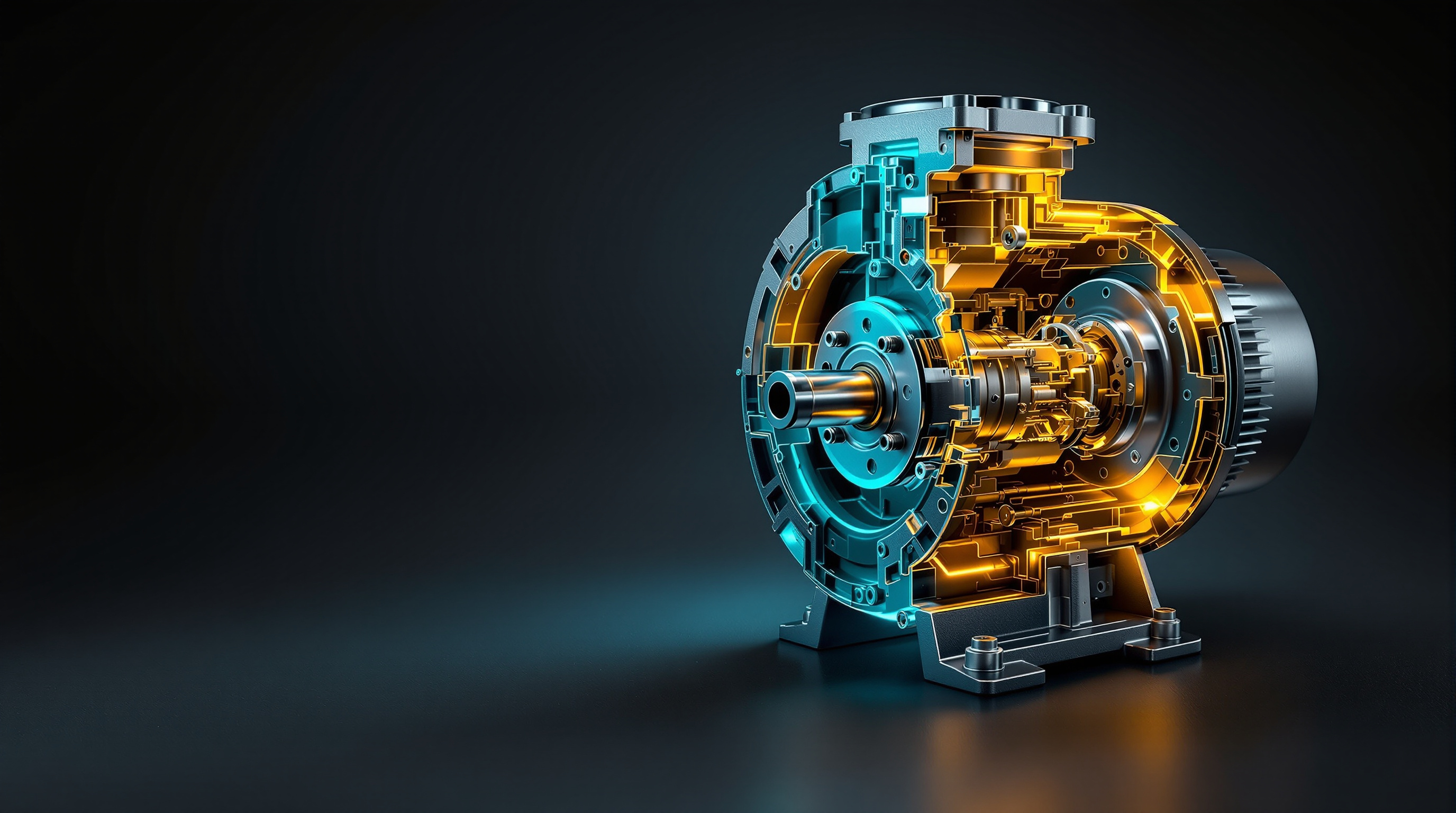
The canned motor pump answers an uncompromising question: what if the pump simply had no place to leak? Instead of sealing the gap where a shaft exits the casing, the canned motor design abolishes the gap. Motor and pump share one shaft inside one welded pressure boundary; the pumped liquid fills the motor itself, circulating through the rotor chamber to cool the windings and lubricate the bearings. There is no mechanical seal, no coupling, no external bearing housing — and no routine emission path to the atmosphere at all.
How the Machine Works
The trick is the can: a thin corrosion-resistant alloy liner, typically a fraction of a millimetre thick, welded around the stator windings to keep the process liquid out of the electrical insulation, with a matching sleeve protecting the rotor. The motor's magnetic field crosses the liner gap as if it were merely a wide air gap; the penalty is some induced loss in the metal liner (and thus a few points of efficiency), the prize is hermetic integrity. A small managed flow of the pumped liquid is routed through the rotor cavity — forward to the impeller suction, or back through external tubing depending on the thermal design — carrying away motor heat and feeding the process-lubricated journal bearings, usually hard carbon or silicon carbide running on hardened sleeves.
Those two facts define the application envelope. The liquid must remain liquid in the rotor chamber (so vapor pressure, temperature rise, and pressure profile need honest calculation), it must tolerate the motor's heat input, and it must offer at least the meagre lubricity the bearings require. Clean, reasonably cool, non-flashing liquids are home territory; liquids near their boiling point, heavily gas-laden, or full of abrasives demand special variants — of which the industry has developed many: high-temperature designs with thermal barriers, slurry designs with external flushes, multi-stage machines for high heads.
Secondary Containment by Construction
A property unique to the design: even if the thin can were breached, the process fluid is still enclosed by the welded outer motor shell — a true secondary containment vessel, pressure-rated and emission-tight. For liquids where a release is simply intolerable — chlorine, hydrofluoric acid duties, refrigerants, heat-transfer fluids, liquefied gases — this double boundary is the decisive argument. Regulatory pressure on fugitive emissions under programs administered by the U.S. Environmental Protection Agency has steadily widened the population of services specified sealless for exactly this reason.
Monitoring: The Built-In Honesty
Because the bearings live inside the pressure boundary, you cannot walk up and listen to them — so the design community answered with instrumentation that conventional pumps rarely carry. Modern canned motor pumps ship with bearing-wear monitors: devices that read the rotor's axial and radial position electrically, through the can, and display remaining bearing margin continuously. Add winding temperature sensors and the result is a machine that reports its own health more candidly than most sealed pumps ever do. The discipline required is different: respect the monitor, never run dry, and treat a tripped thermal protection as information rather than inconvenience. Dry running is the canonical killer — a process-lubricated bearing without process is a bearing on borrowed seconds.
Canned Motor versus Magnetic Drive
The natural comparison is with the magnetic drive pump, the other route to sealless service. The honest summary: magnetic drives use standard motors and keep all electrics outside the fluid (attractive for maintenance and for very aggressive chemistries), while canned motor designs are more compact, intrinsically double-contained, run quieter, and tolerate higher system pressures gracefully since the motor shell shares the load. Total efficiency is comparable once liner and shell losses are both counted. In hydrocarbon processing both live under API 685; in chemical duty both appear in sealless variants of the ANSI/ISO chemical pump families. The fluid, the plant's maintenance philosophy, and the containment requirement — not fashion — should make the call; our selection note supplies the framework.
Where You Will Meet Them
Canned motor pumps carry refrigerants in industrial chilling, circulate heat-transfer oils, move liquefied gases and light hydrocarbons, dose and transfer the chemical industry's least forgiving liquids, and serve nuclear and semiconductor duties where leak-tightness is doctrine. They are also the conceptual ancestor of the submerged machines described on our cryogenic page — the same hermetic logic, carried two hundred degrees below zero. For the broader map of where the design sits among its relatives, return to the technology overview.