Pump Technologies: An Overview
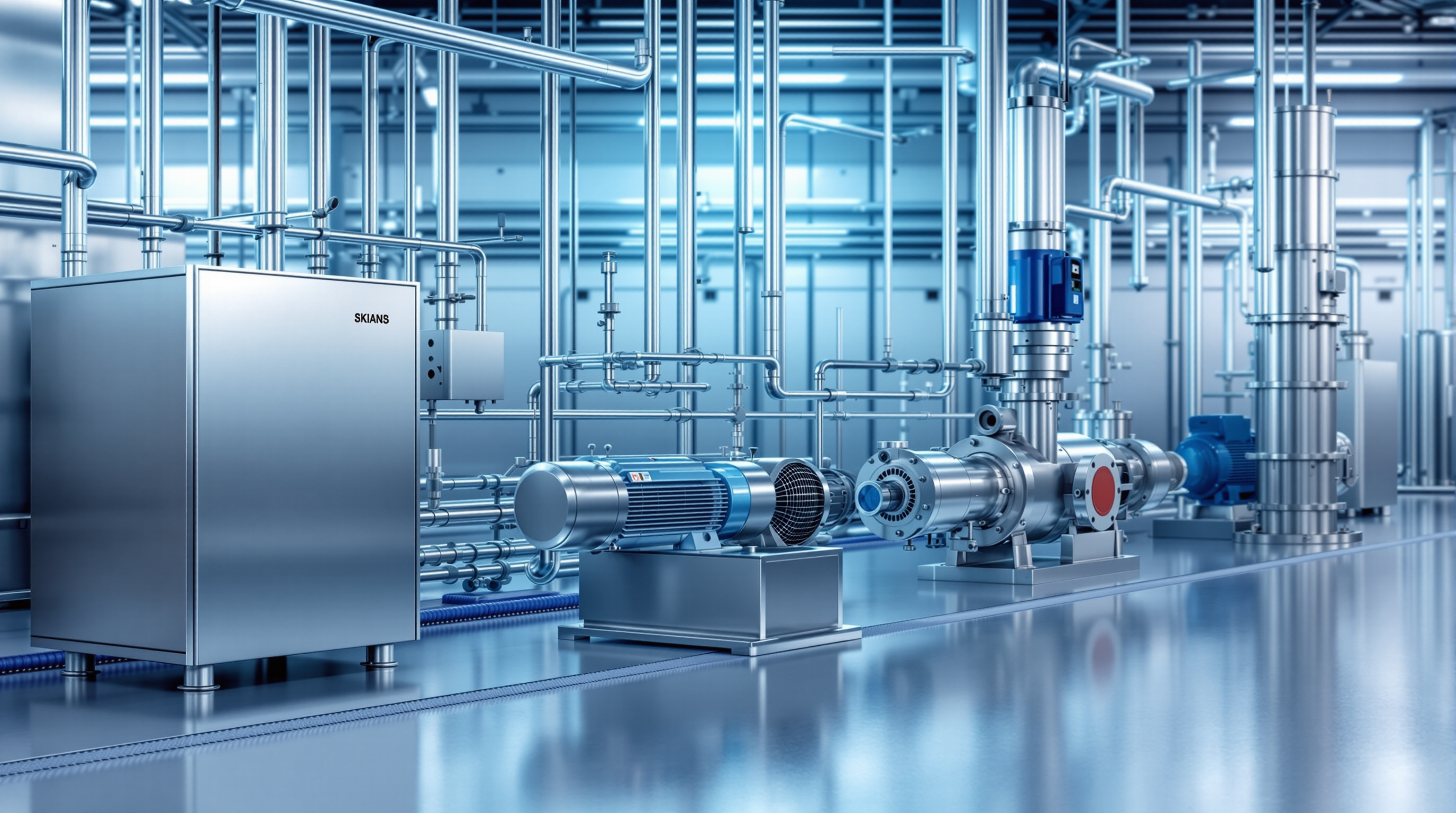
Every industrial pump ever built answers the same question — how do you add energy to a liquid? — and there are only two honest answers. You can spin the liquid and convert velocity into pressure, or you can trap a volume of it and push. The first answer produces the rotodynamic family; the second, positive displacement. Everything else is refinement: of materials, of sealing, of precision, of temperature range. This section of the site takes the major refinements one at a time; this page is the map.
The Two Families
Rotodynamic pumps add energy continuously through a spinning impeller. Their flow varies strongly with system resistance, falls smoothly along a curve, and can be throttled — characteristics that make them flexible, simple, and overwhelmingly dominant where flows are large and pressures moderate. The archetype is the centrifugal pump, the machine that moves most of the liquid on Earth.
Positive displacement pumps trap and transfer fixed volumes — with pistons, plungers, diaphragms, gears, screws, lobes, or vanes. Their flow is nearly independent of pressure, which makes them the choice for high pressures at modest flows, for viscous liquids that smother impellers, and for any duty where flow must be known rather than merely produced. Their precision branch is the controlled-volume metering pump, an instrument as much as a machine. Their defining hazard is also their virtue: a blocked discharge does not reduce their flow, so every PD installation carries relief protection.
The Containment Problem
Both families share a weakness at the point where the driving shaft enters the pressurized casing. For a century the answers were packing, then mechanical seals — and for most services a well-applied seal remains the right answer. But when the liquid is toxic, flammable, carcinogenic, or simply irreplaceable, industry developed designs that abolish the shaft penetration altogether. The canned motor pump folds the motor into the pressure boundary itself, the rotor spinning inside a hermetically welded liner, cooled and lubricated by the pumped liquid. The magnetic drive pump keeps a standard motor outside and pulls the impeller around through a sealed containment shell with synchronized permanent magnets. Choosing between them — and knowing when a sealed pump is still the better engineering answer — is one of the classic specification problems in chemical service.
The Temperature Frontier
At the cold extreme, pumping liquefied gases — LNG at −162 °C, nitrogen, oxygen, hydrogen — demands machines that survive where lubricants freeze and elastomers shatter. The cryogenic pump family adapts the sealless idea to its logical conclusion: entire pump-and-motor assemblies submerged in the liquid they pump, with the cryogen itself serving as coolant and bearing lubricant.
Choosing Among Them
The selection logic that sorts a duty into the right family — flow, head, viscosity, fluid hazard, precision requirement, temperature — is treated in our selection and sizing note, and the vocabulary you will meet along the way is defined in the glossary. Two rules of thumb travel well. First: the fluid chooses the pump; flow and head only narrow the catalogue. Second: prefer the simplest machine that genuinely satisfies the duty — every component you do not install is one that cannot fail. The standards that codify all of this, from ASME B73 to API 610 and 675, are collected with commentary on our resources page, with the Hydraulic Institute as the natural first stop.